
23 Valid IDs in the Philippines – But Only These Actually Get Accepted Everywhere
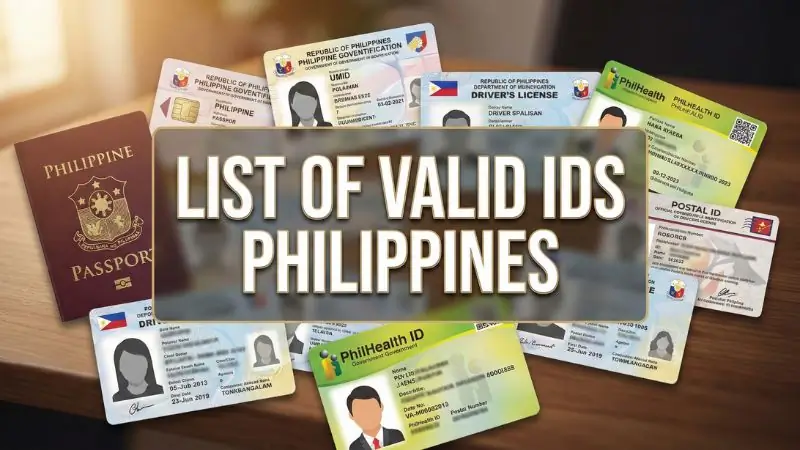
Bookmark this page. Here’s the complete, updated list of valid IDs in the Philippines including government-issued, private, and alternative IDs.

By: Paul Daveril Dabuco
Posted: February 12, 2026
Updated: June 12, 2026
Disclaimer: This post is not a financial or investing advice, it’s for educational purposes only. It may contain affiliate links, meaning I get a commission if you decide to make a purchase, at no extra cost to you. Read our disclosure
You’re finally at the bank teller’s window after waiting 45 minutes in line. You hand over your ID. The teller looks at it, then looks at you, and says: “Sorry po, hindi po ito valid dito.”
Frustrating, right? Especially when you thought you had a perfectly good ID in your wallet.
The truth is, not all IDs carry the same weight in the Philippines. Some are universally accepted everywhere from Pag-IBIG to the nearest Palawan Express. Others are only valid in specific situations. And a handful are technically government-issued but routinely rejected anyway.
This guide gives you the complete, up-to-date list of every valid ID in the Philippines either government-issued and otherwise, along with exactly where to get each one, how long it takes, and how much it costs.
Whether you’re opening a bank account, registering a SIM card, applying for a job, or transacting at any government office, this is the only ID guide you’ll need. Bookmark this for future reference.
Most Commonly Accepted IDs by Purpose
Not all valid IDs are created equal in practice. Here is a quick-reference guide to which IDs carry the most weight in the situations Filipinos encounter most often.
|
Transaction |
Best ID to Bring |
Acceptable Secondary ID |
|---|---|---|
|
1. Bank account opening |
||
|
2. SIM registration |
Any primary government ID |
|
|
3. Government agency |
Agency-specific ID |
PhilSys National ID |
|
4. Notarial services |
||
|
5. Employment application |
||
|
6. Domestic flights |
What is a Valid ID in the Philippines?
A valid ID in the Philippines is an identification document issued by a government agency (or, in some cases, a recognized private institution) that verifies your identity. It typically contains your:
Institutions require valid IDs for identity verification, fraud prevention, and compliance with regulations like Know-Your-Customer (KYC) policies in banks and financial institutions.
Primary vs. Secondary Valid IDs
Not all IDs carry the same weight. In practice, IDs are usually categorized into:
1️⃣ Primary IDs
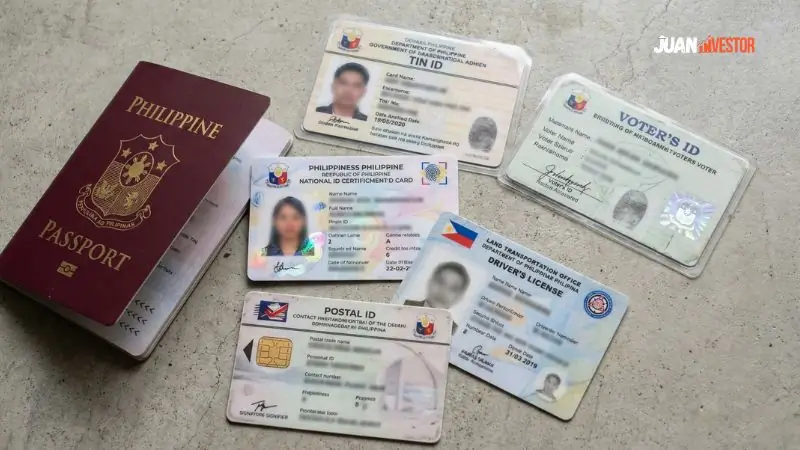
These are government-issued IDs that are widely accepted for major transactions like opening bank accounts, applying for loans, or securing a passport.
Examples include:
- Philippine Statistics Authority-issued PhilSys National ID
- Department of Foreign Affairs passport
- Land Transportation Office driver’s license
Primary IDs are typically enough on their own for most transactions.
2️⃣ Secondary IDs
These are supporting identification documents. On their own, they may not be sufficient for high-level transactions, but they can:
- Supplement a primary ID
- Be combined with other secondary IDs
- Serve as temporary identification
Why Institutions are Strict About Valid IDs
Organizations verify IDs to:
In short: A valid ID isn’t just a formality. It’s your access pass to banking, travel, government services, and even digital platforms.
What Makes an ID “Valid” in the Philippines?
According to the Bangko Sentral ng Pilipinas (BSP) and various government agencies, a valid ID must generally meet these three conditions:
- Issued by a government agency or authorized institution — it must come from a recognized national or local government body, or an institution authorized to issue IDs (like PRC or SSS).
- Bears the holder’s photo and signature — a card with only a name or barcode is generally not considered sufficient for most formal transactions.
- Not expired — most institutions will not accept expired IDs, although some (like the PhilSys National ID) currently have no expiration date.
In practice, most transactions in the Philippines will ask for “one valid government-issued ID with photo” or “two valid IDs.” The safest bet is always to carry a Primary Government-Issued ID, which we cover in the next section.
Primary Government-Issued IDs
These are the most widely recognized and accepted IDs across banks, government agencies, telecoms, and private establishments in the Philippines. If you only have one ID in your wallet, it should be from this list.
For each ID, we’ve included: who it’s for, where to get it, typical use cases and validity.
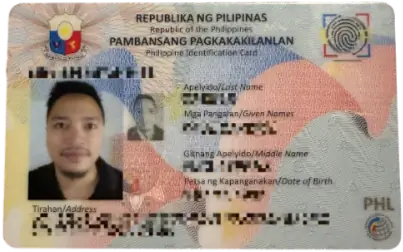
1. Philippine National ID / PhilSys National ID
The National ID is designed to serve as the central identification system in the Philippines and is increasingly accepted across institutions.
- Issued by: Philippine Statistics Authority
- Who can apply: Filipino citizens and resident aliens
- Typical use cases: Opening bank accounts, SIM registration, government transactions, private sector verification
- Validity period: No expiration for Filipino citizens; resident alien cards may have validity periods
2. Philippine Passport
The Philippine passport is one of the most universally accepted primary IDs both locally and internationally.
- Issued by: Department of Foreign Affairs via Passport Appointment System
- Who can apply: Filipino citizens
- Typical use cases: International travel, visa applications, banking transactions, hotel check-ins, major legal and financial documents
- Validity period: 10 years for adults; 5 years for minors
3. Driver’s License
Driver’s License is one of the most commonly presented IDs for everyday transactions.
- Issued by: Land Transportation Office
- Who can apply: Individuals who meet age and driving requirements and pass examinations
- Typical use cases: Banking, government transactions, vehicle-related matters, general identification
- Validity period: Usually 5 to 10 years depending on compliance history
4. SSS ID / UMID Card
The UMID card consolidates multiple government identification systems into a single card.
- Issued by: Social Security System or Government Service Insurance System
- Who can apply: SSS or GSIS members
- Typical use cases: Social security transactions, pension claims, banking, government services
- Validity period: Generally does not expire unless replaced
5. PRC ID
This ID is issued to regulated professionals such as engineers, teachers, nurses, and accountants.
- Issued by: Professional Regulation Commission
- Who can apply: Licensed professionals who passed board examinations
- Typical use cases: Professional practice, banking, employment verification, government transactions
- Validity period: Typically 3 years, renewable
6. Postal ID
The Postal ID is often considered one of the more accessible government-issued primary IDs.
- Issued by: Philippine Postal Corporation
- Who can apply: Filipino citizens and qualified residents
- Typical use cases: Banking, government services, private transactions requiring identification
- Validity period: 3 years for Filipino citizens; 1 year for foreign residents
7. Voter’s ID
Issuance policies may vary, so availability depends on current regulations.
- Issued by: Commission on Elections
- Who can apply: Registered Filipino voters
- Typical use cases: Voting and identification for certain financial and government transactions
- Validity period: Typically valid as long as voter registration remains active
8. Senior Citizen ID
The Senior Citizen ID provides access to benefits and discounts mandated by law.
- Issued by: Local Government Units under the Office of Senior Citizens Affairs
- Who can apply: Filipino citizens aged 60 and above
- Typical use cases: Availing senior citizen discounts, government services, identification
- Validity period: Generally valid for life unless replaced
9. PWD ID
The PWD ID grants access to statutory benefits and protections.
- Issued by: Local Government Units
- Who can apply: Qualified persons with disabilities
- Typical use cases: Availing disability-related benefits and discounts, identification for medical and government transactions
- Validity period: May vary by LGU
10. OFW ID
This ID verifies official OFW registration.
- Issued by: Department of Migrant Workers
- Who can apply: Registered Overseas Filipino Workers
- Typical use cases: Overseas employment verification, government services, banking
- Validity period: Depends on overseas employment status
11. Seaman’s Book
Also known as the Seafarer’s Identification and Record Book.
- Issued by: Maritime Industry Authority
- Who can apply: Licensed seafarers and maritime workers
- Typical use cases: Maritime employment, travel documentation, identification
- Validity period: Typically 10 years
12. Alien Certificate of Registration Identity Card
Commonly referred to as the ACR I-Card, it serves as the primary ID for foreign residents.
- Issued by: Bureau of Immigration
- Who can apply: Foreign nationals residing in the Philippines
- Typical use cases: Immigration compliance, banking, business transactions
- Validity period: Depends on visa type and immigration status
List of Secondary Valid IDs in the Philippines
Secondary IDs are commonly accepted as supporting documents. Requirements vary depending on the institution, so always confirm beforehand.
Below is a list of commonly recognized secondary valid IDs in the Philippines:
13. TIN ID
Issued by the Bureau of Internal Revenue and used primarily for tax-related transactions. It is often considered secondary unless accompanied by another ID.
14. PhilHealth ID
Issued by PhilHealth. It is used for health insurance claims and medical transactions. Usually treated as secondary ID.
15. Company ID
Issued by a private employer. It is accepted in some banks and establishments but rarely accepted alone for major financial transactions.
16. Barangay Clearance
Issued by your local barangay office. It is commonly used for local employment requirements and as supporting identification.
17. Police Clearance
Issued by the Philippine National Police. It’s often required for employment and government applications. Considered a supporting document.
18. NBI Clearance
Issued by the National Bureau of Investigation. Widely required for job applications, travel, and certain legal transactions. Typically secondary.
19. School ID
Issued by recognized educational institutions. Usually accepted if currently enrolled and accompanied by registration documents.
20. PSA Birth Certificate
Issued by the Philippine Statistics Authority. Not technically an ID (no photo), but frequently required as a supporting identity document.
21. Marriage Certificate (PSA)
Also issued by the Philippine Statistics Authority. Used for name change verification and legal documentation.
22. Bank ATM Card (With Name Printed)
Some institutions accept this as supporting identification if your name is printed on the card.
23. Student Permit
Issued by the Land Transportation Office. May be accepted as supporting ID in limited cases.
Important Reminder
Acceptance of secondary IDs varies by institution. Some banks require:
- 1 Primary ID, or
- 2–3 Secondary IDs combined
Always check the official website or call the institution before visiting to avoid wasted trips.
School and Company IDs (When are they accepted?)
School and company IDs are not government-issued, which means they do not automatically qualify as valid IDs for most official transactions. However, there are specific situations where they are accepted, and it’s useful to know exactly when and where.
When School IDs are Accepted
School IDs issued by universities and colleges recognized by CHED (Commission on Higher Education) or DepEd are accepted in the following situations:

When Company IDs are Accepted
A company ID issued by a registered private or public company has slightly broader acceptance than a school ID, but it still falls short of government ID recognition in most formal settings.
The Bottom Line on School and Company IDs
Think of school and company IDs as supporting documents rather than standalone identification. They are most useful when you need a second ID to accompany your primary government-issued one.
If you are a student or a first-time worker without a government ID yet, prioritize getting a Postal ID or registering for the PhilSys National ID, as both are accessible and fast to obtain.
What If You Don’t Have a Valid ID Yet?
Not having a valid ID can feel like a dead end. You cannot open a bank account, apply for jobs easily, or complete government transactions. The good news is you can build your identification portfolio step by step.
Step 1: Start with the most accessible ID
Begin with IDs that are generally easier to obtain:
These can serve as your foundation.
Step 2: Prepare supporting documents
Before applying for any government ID, secure these documents:
Having complete documents reduces delays and repeat visits.
Step 3: Build your ID stack
Once you secure one primary ID:
Over time, you should aim to have at least two active primary IDs. This prevents transaction delays in urgent situations.
Frequently Asked Questions
What is the easiest valid ID to get in the Philippines?
The National ID or Postal ID are the easiest valid ID to secure because they are designed to be widely accessible.
Is a TIN ID considered a primary ID?
In most cases, a TIN ID issued by the Bureau of Internal Revenue is treated as a secondary ID. It is usually required for tax purposes but may not be sufficient alone for major financial transactions.
How many valid IDs do I need?
Most banks and institutions require 1 primary ID. If you do not have a primary ID, you may need 2 or more secondary IDs depending on the institution’s policy.
Is the Philippine National ID enough for everything?
The PhilSys National ID is increasingly accepted nationwide. However, some institutions may still request an additional supporting document depending on their internal compliance rules.
Can I use an expired ID?
Expired IDs are generally not accepted. Always renew your IDs before they expire to avoid disruptions in transactions.
Common Mistakes to Avoid
1. Bringing expired IDs
Many applications get rejected simply because the ID has already expired. Always check the validity date before visiting any office.
2. Assuming all IDs are accepted everywhere
Acceptance policies vary. A bank may accept an ID that a government office does not. Always confirm requirements beforehand.
3. Inconsistent signatures
If your signature on your ID does not match your signature on forms, this can delay processing. Maintain a consistent signature across documents.
4. Using unofficial or questionable IDs
Only government-issued or officially recognized IDs are accepted for major transactions. Avoid relying on informal or unverified identification cards.
5. Not checking updated requirements
Policies can change. Before applying, check the official website of the issuing agency or contact them directly.
Final Thoughts
Valid IDs are not just paperwork. They are part of your financial and legal foundation.
With proper identification, you can open bank accounts, apply for loans, secure employment, access government benefits, and complete important life transactions without unnecessary stress.
If you do not yet have a valid ID, start small. Secure your foundational documents, apply for your first primary ID, then gradually build your ID stack.
Your future self will thank you when a time-sensitive opportunity comes and you are fully prepared.
Tags:

Written by
Paul Daveril Dabuco
Founder, Juan Investor • Digital marketing expert and investor
Paul bought his first stock in 2013 and has spent the decade since compounding and making the expensive mistakes he now writes about so you can skip them. Read my profile.
Paul Daveril Dabuco is the founder and author of Juan Investor. He started investing in stocks in 2013 and currently holds a portfolio of stocks, crypto and index fund investments. When he’s not blogging he’s either tinkering on Facebook ads or exploring white sand beaches across the globe.
FOLLOW me

Subscribe to Juan Investor
Be the first to know when a new article (or a giveaway) is out. No spam.





Leave a Reply