
How to Invest in REITs in the Philippines: Beginner-Friendly Guide
Learn how to invest in REITs in the Philippines with this step-by-step guide. Discover the best REITs, minimum capital, and tips to maximize returns.

By: Paul Daveril Dabuco
Posted: October 17, 2024
Updated: February 28, 2026

Disclaimer: This post is not a financial or investing advice, it’s for educational purposes only. It may contain affiliate links, meaning I get a commission if you decide to make a purchase, at no extra cost to you. Read our disclosure
The moment you hear the word investing, you might walk away. I get it. Numbers, charts, and the agonizing thought of analyzing real estate can sound about as thrilling as watching paint dry on a humid Manila afternoon.
But wait. Before you scroll away, let me introduce you to Real Estate Investment Trusts (REITs). “REITs huh, why should I care?”
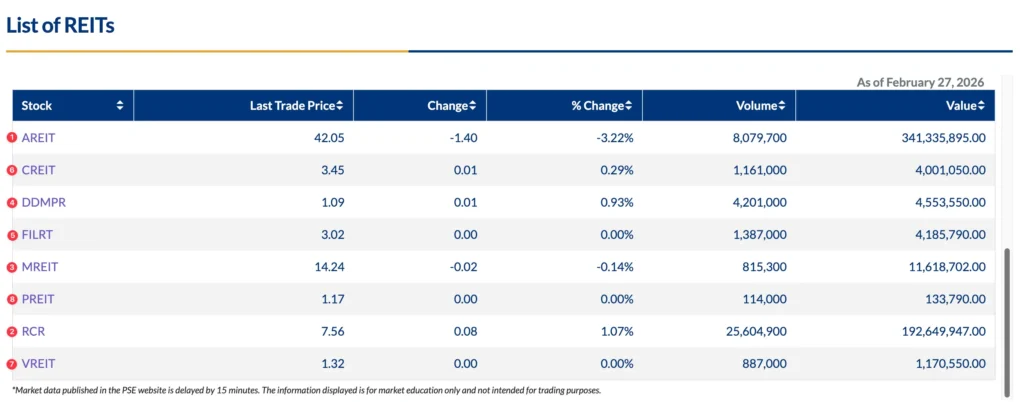
Well, there are about 8 REITs in the Philippines as of Feb 2026 and their market cap is around ₱559 Billion. And what if you could get even a small slice of this big ensaymada (PH context)? That would be amazing, ‘di ba?
If you want to stop relying on tipid hacks just to survive petsa de peligro, you need assets that pay you while you sleep.
By the end of this guide, you will have a solid plan to hit your ipon goals. You might even brag a little during your next family reunion.
Key Takeaways:
- Real estate Lite: You invest in income-generating properties without managing them.
- Steady payouts: The law requires REITs to distribute 90% of their rental income as dividends.
- Low barrier: You can start with just a few thousand pesos.
- REIT options: AREIT, RCR, MREIT, and DDMPR dominate the Philippine Stock Exchange (PSE).
- Compound it: Reinvest those dividends to grow your portfolio faster.
What the Heck is a REIT Anyway?
A REIT (Real Estate Investment Trust) is like the Netflix of real estate investing. Instead of buying an entire condo or a commercial building (which, let’s face it, most of us can’t afford), you buy shares in a company that owns and operates income-generating real estate. It’s like owning a slice of a ensaymada without having to bake the whole thing yourself.

When you invest in a REIT, you’re essentially pooling your money with other investors to own pieces of real estate properties such as:
- Malls
- Office buildings
- Hotels
- Warehouses
- Hospitals
And the best part? REITs pay dividends. That means, just by holding onto your shares, you’ll receive a portion of the rental income that these properties generate. It’s like getting rent money without having to deal with leaky faucets or noisy neighbors.
Why Should You Invest in REITs in the Philippines?
The Philippines is currently experiencing a boom in the REIT market. Since the government passed the REIT Act of 2009, more and more companies have been jumping into the game, offering investors like you and me a way to profit from the country’s growing real estate sector.

But why REITs, you ask? Well, here are a few reasons:
My First Time Investing in REITs: A Comedy of Errors
Before we get into the nitty-gritty of how you can start investing, I have to confess something. When I first heard about REITs, I thought it was a new type of cryptocurrency (don’t judge me!).
I had visions of some sort of real estate-backed Bitcoin and was ready to throw my money at it. But after doing some research (and, let’s be real, a LOT of Googling), I realized that REITs are a whole different beast.
The first REIT I invested in was AREIT, the first REIT company listed in the Philippines. I bought a few shares, crossed my fingers, and waited. And waited. And waited some more. When I finally did receive my first dividend payment, it was like discovering an extra pack of instant noodles in your pantry – unexpected, but deeply satisfying.

Since then, I’ve become more familiar with the process, and I’m here to make sure your first experience with REITs isn’t as confusing as mine was!
Step-by-Step Guide to Invest in REITs in the Philippines
Okay, enough about me. Let’s get you started on your REIT journey! Here’s a step-by-step guide to investing in REITs in the Philippines:
Step 1: Open a trading account
First things first, you’ll need a trading account. A trading account is like your gateway to buying and selling stocks on the Philippine Stock Exchange (PSE), and REITs are no different.
Here’s how you can get one:
- Choose a Broker: There are several online brokers in the Philippines that allow you to trade REITs. Some popular ones include:
- COL Financial (colfinancial.com)
- BDO (https://www.bdo.com.ph)
- First Metro Sec (firstmetrosec.com.ph)
- Complete the Application: Once you’ve chosen a broker, you’ll need to fill out an application form. This usually involves providing personal information, proof of identity, and proof of address (yep, they need to know you’re a real person and not a bot).
- Fund Your Account: After your account is approved, you’ll need to fund it. This is where you’ll deposit the money you’ll use to buy REIT shares. You can do this via online banking, over-the-counter deposits, or even GCash (because, let’s be honest, who actually goes to the bank anymore?).
Step 2: Research the available REITs
Now that you’ve got your trading account all set up, it’s time to do some research. Not all REITs are created equal, so it’s important to find one that suits your investment goals.
There are 8 REITs listed on the Philippine Stock Exchange (as of Feb 2026). These are ranked in terms of market cap.
Take a good look at their dividend yields, the types of properties they own, and their growth potential. You can usually find this information on their company websites or through your broker’s research section.

Step 3: Buy Your First REIT Shares
Once you’ve done your research and decided which REIT to invest in, it’s time for the fun part: buying shares!
- Log in to your Trading Account: This is where you’ll place your order to buy REIT shares.
- Look for the Stock Symbol: Each REIT has a unique stock symbol (e.g., AREIT’s symbol is AREIT). Make sure you’re buying the correct one!
- Place a Buy Order: You’ll need to decide how many shares you want to buy and at what price. If you’re not sure what price to set, you can just place a market order, which means your broker will buy the shares at the current market price.
- Confirm Your Order: Once you’ve placed your order, all you have to do is wait for it to be executed. If everything goes smoothly, you’ll see the REIT shares in your portfolio.
Congratulations, you’re now a proud REIT investor! 🎉
How Much Can You Expect to Earn from REITs in the Philippines?
Expect to earn between 5-9% dividend yield from your REITs investment. The dividend yield is the percentage of your investment that you’ll receive in dividends each year.
For example, if a REIT has a dividend yield of 5% and you invest ₱100,000, you can expect to earn ₱5,000 in dividends per year. Not bad, right?
Here’s a quick breakdown of what to expect from some of the current REITs in the Philippines:
- DDMPR: Dividend yield of around 8-9%.
- MREIT: Dividend yield of around 6-7%.
- RCR: Dividend yield of around 5-7%.
- AREIT: Dividend yield of around 5-6%.
Remember, these are just estimates. The actual amount you’ll earn will depend on the performance of the REIT and the overall market conditions.
REITs vs. Direct Real Estate Investment: Which One is Better for You?
At this point, you might be wondering: Why bother with REITs when I could just buy a condo and rent it out myself?
That’s a fair question! Both REITs and direct real estate investment have their pros and cons, so let’s break it down:
REITs
- Pros:
- Lower initial investment required.
- No need to manage properties or tenants.
- Easy to buy and sell on the stock market.
- Diversified exposure to different types of real estate.
- Cons:
- Dividends can fluctuate depending on market conditions.
- You have less control over the properties.
Direct Real Estate Investment:
- Pros
- You have full control over the property.
- Potential for price appreciation over time.
- You can earn rental income directly.
- Cons:
- Requires a large upfront investment.
- Managing tenants and properties can be time-consuming and stressful.
- Real estate can be difficult to sell quickly.
In the end, the best option for you depends on your investment goals, risk tolerance, and how much time you’re willing to commit to managing properties.
Tips for REIT Investing Success
Before I wrap this up, here are a few tips to help you succeed in your REIT investing journey:
- Diversify: Don’t put all your money into just one REIT. Spread your investment across different REITs to minimize risk.
- Reinvest Your Dividends: Instead of spending your dividends, consider reinvesting them to buy more shares. This can help you grow your wealth over time.
- Stay Updated: Keep an eye on the performance of your REITs and any news that could impact the real estate market (e.g., changes in interest rates or government policies).
- Be Patient: Like any types of investments, REITs take time to grow. Don’t panic if the value of your shares fluctuates in the short term.
Final Thoughts
In a word? Yes. If you’re looking for a way to invest in real estate without the hassle of buying, managing, and selling properties, REITs are a fantastic option. The Philippine REIT market is still relatively young, which means there’s plenty of room for growth. Plus, with the potential for steady dividend income and the ability to diversify your investment, it’s a great way to build wealth over time.
So, what are you waiting for? Get out there, open a trading account, and start your REIT investing journey today. Who knows? In a few years, you might just find yourself sipping piña coladas on the beach, funded entirely by your REIT dividends.
Happy investing, and may your dividends be plentiful!
FAQ
Which REIT offers the best investment opportunities in the Philippines?
Currently, AREIT, MREIT, and RCR are among the top-performing REITs in the Philippines, which could be one of the best investments in the Philippines right now. Each of them offers a strong mix of property portfolios and competitive dividend yields.
What’s the minimum capital required to start investing in REITs?
Typically, you can start investing in REITs with as little as ₱1,000 to ₱5,000, depending on the brokerage and the REIT’s price. The minimum investment depends on the current stock price and the board lot (minimum number of shares) of the REIT.
What are some potential downsides of investing in REITs?
One downside is that REITs are tied to real estate market performance, making them vulnerable to economic downturns. Additionally, dividends may fluctuate, and investors have limited control over the properties compared to direct real estate ownership.
Do REITs provide regular monthly payouts?
Most REITs in the Philippines pay dividends quarterly, not monthly. However, this still provides a reliable and regular stream of income for investors.
In what ways can REITs generate income for investors?
REITs generate income primarily through dividend payouts, which come from the rental income of the properties they manage. Additionally, investors can earn from capital appreciation if the value of the REIT shares increases over time.
Is investing in REITs a wise financial decision?
REITs can be a smart investment for those seeking passive income and portfolio diversification. Since they provide steady dividends and the potential for long-term growth, they are considered a relatively stable option compared to other stock market investments.
How much profit can you expect from investing in REITs in the Philippines?
The profit from investing in REITs comes from dividend yields and capital gains. Dividend yields in the Philippines typically range from 4% to 7% annually, but actual returns depend on the REIT’s performance and market conditions.
Are you able to sell your REIT shares whenever you want?
Yes, REITs are traded on the Philippine Stock Exchange (PSE), so you can sell your shares anytime during market hours, just like regular stocks. However, selling at the right time ensures you get a favorable price.
Is it possible to invest in REITs without using a broker?
No, to buy and sell REITs listed on the Philippine Stock Exchange, you need to go through a licensed broker. You can easily open an account with online brokerage platforms like COL Financial or BDO to start trading.

Written by
Paul Daveril Dabuco
Founder, Juan Investor • Digital marketing expert and investor
Paul bought his first stock in 2013 and has spent the decade since compounding and making the expensive mistakes he now writes about so you can skip them. Read my profile.
Paul Daveril Dabuco is the founder and author of Juan Investor. He started investing in stocks in 2013 and currently holds a portfolio of stocks, crypto and index fund investments. When he’s not blogging he’s either tinkering on Facebook ads or exploring white sand beaches across the globe.
FOLLOW me

Subscribe to Juan Investor
Be the first to know when a new article (or a giveaway) is out. No spam.
You might like these posts





2 responses to “How to Invest in REITs in the Philippines: Beginner-Friendly Guide”
-
Reits or stocks? Which is better for investment?
-
Both have their own merits, and it depends on your investment goals, risk tolerance, and investment horizon.
REITs are more stable and provide steady dividends.
Stocks have higher capital appreciation, but risk is also high.
But you don’t have to choose one, you can have them both in your portfolio.
-


Leave a Reply