The Most Dangerous Financial Scams in 2026 Don’t Look Like Scams Anymore
Protect your money from deepfake fraud, crypto scams, and AI voice phishing. Learn the warning signs and defense strategies every Filipino must know in 2026.
Disclaimer: This post is not a financial or investing advice, it’s for educational purposes only. It may contain affiliate links, meaning I get a commission if you decide to make a purchase, at no extra cost to you. Read our disclosure
4 scams targeting Filipinos right now and the simple ways to protect yourself before you lose money. Scammers in 2026 use deepfakes, voice cloning, and fake crypto platforms to steal from Filipinos. Protect yourself by verifying everything, enabling 2FA, and never trusting guaranteed returns.
Ivy Santos, a 34-year-old graphic designer from Quezon City, received a video call from her bank manager. She recognized his face immediately. Same receding hairline, same mole above his left eyebrow, even the same nervous laugh he always had when discussing account issues.
“Ma’am Ivy, we’ve detected suspicious activity on your account,” he said, concern etched across his familiar features. “We need to verify your details immediately to prevent unauthorized withdrawals.”
Ivy complied. Why wouldn’t she? She was literally looking at someone she’d met in person three times.
Twenty minutes later, ₱487,000 vanished from her business account.
The man on the video call? Not her bank manager. A deepfake. A digital puppet show so convincing that Ivy’s brain couldn’t distinguish reality from artificial construction.
Welcome to 2026, where scammers have upgraded from crude phishing emails to Hollywood-level production value. And if you’re doing business in the Philippines right now, whether you’re running a startup, freelancing, or managing a small enterprise, you’re swimming in waters filled with predators you can’t even see coming.
Let’s change that.
The Landscape Has Changed (And Not in Your Favor)
Remember when scams were easy to spot? The misspelled emails from “Nigerian princes,” the obviously fake lottery wins, the grammatically catastrophic messages that screamed “FRAUD” from a mile away?
Those days are dead.
Today’s scammers are sophisticated, well-funded, and armed with technology that would make a Silicon Valley startup jealous.
They’re not working from dingy internet cafes anymore. They’re operating from organized crime syndicates with AI developers, social engineers, and psychological manipulation experts on payroll.
The Philippines has become a particularly juicy target. Why? Three reasons:
Our digital adoption rateexploded post-pandemic. More Filipinos are banking online, investing digitally, and conducting business through apps than ever before. More digital activity means more attack surfaces.
Strong social media culture makes us vulnerable. We share everything including our locations, our celebrations, our family connections, our business wins. Scammers harvest this information like farmers during harvest season.
Financial literacy hasn’t kept pace with technological advancement. We’ve been handed powerful digital tools without the instruction manual on how to protect ourselves.
The result? Bangko Sentral ng Pilipinas reported a 118% increase in digital fraud cases from 2023 to 2024. And 2026? We’re on track to double that.
But here’s the thing: knowledge is your firewall. So let’s break down exactly what you’re up against.
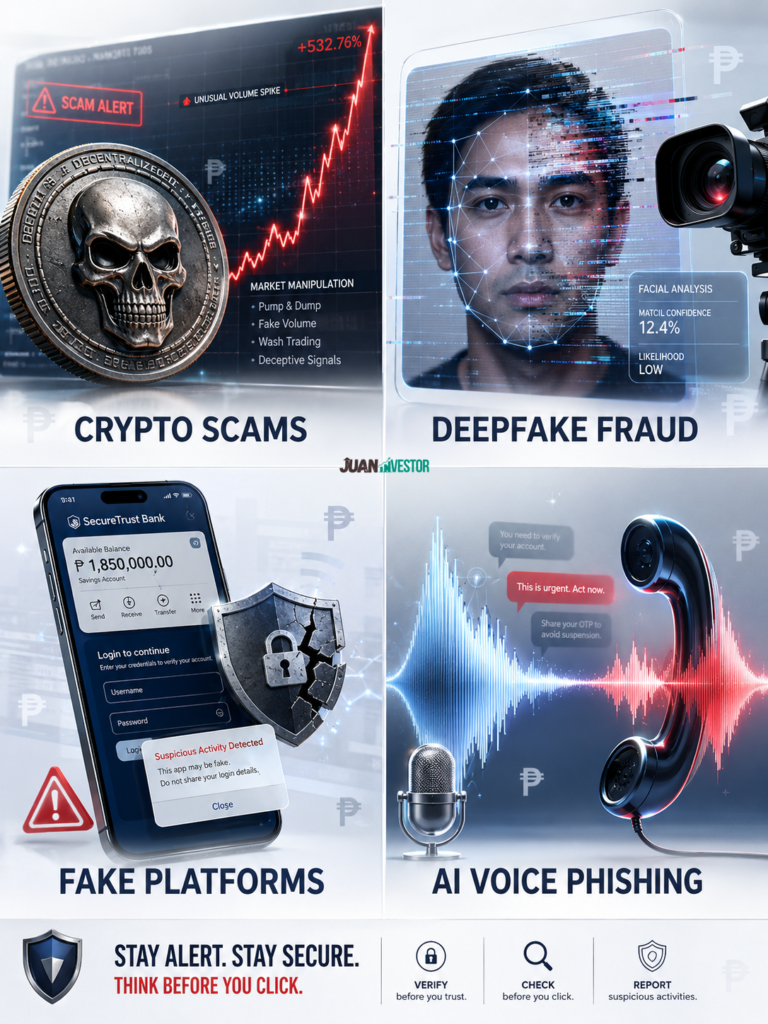
Crypto Scams
The Get-Rich-Quick Mirage
Scroll through your Facebook feed right now. I’ll wait.
Chances are, you’ll see at least one post about someone’s “incredible crypto gains,” usually featuring screenshots of trading apps showing five or 6-figure profits, luxury car photos, and captions about “financial freedom.”
These are the breadcrumbs leading to the trap.
Modern crypto scams in the Philippines come in several flavors, but they all exploit the same psychological triggers: FOMO (fear of missing out), social proof, and the dream of easy wealth.
The Common Schemes
The Liquidity Mining Trap: you’re invited to join an “exclusive” crypto investment pool. The platform looks legitimate with a professional website, active Telegram community, even video testimonials from “successful investors.” You start small, maybe ₱5,000. Within days, your dashboard shows you’ve earned ₱2,000 in returns. Incredible! You invest more. Your friends invest. Then one morning, the website is gone. So is your money.
The Rug Pull: you hear about a new Filipino-made cryptocurrency like “PinoyToken” or “BayaniCoin,” that’s going to revolutionize remittances or support local farmers or some other noble-sounding cause. Early investors are promised massive returns. The token launches, prices climb, excitement builds. Then the creators sell all their holdings at once, the price crashes to zero, and they disappear with millions.
The Fake Exchange: a slick app promises lower fees than Binance or Coins.ph. You transfer your crypto there for “better trading opportunities.” The app shows your balance. You can even make small withdrawals at first (to build trust). But when you try to withdraw your full amount? Suddenly there are “technical issues” or “verification requirements” that never get resolved.
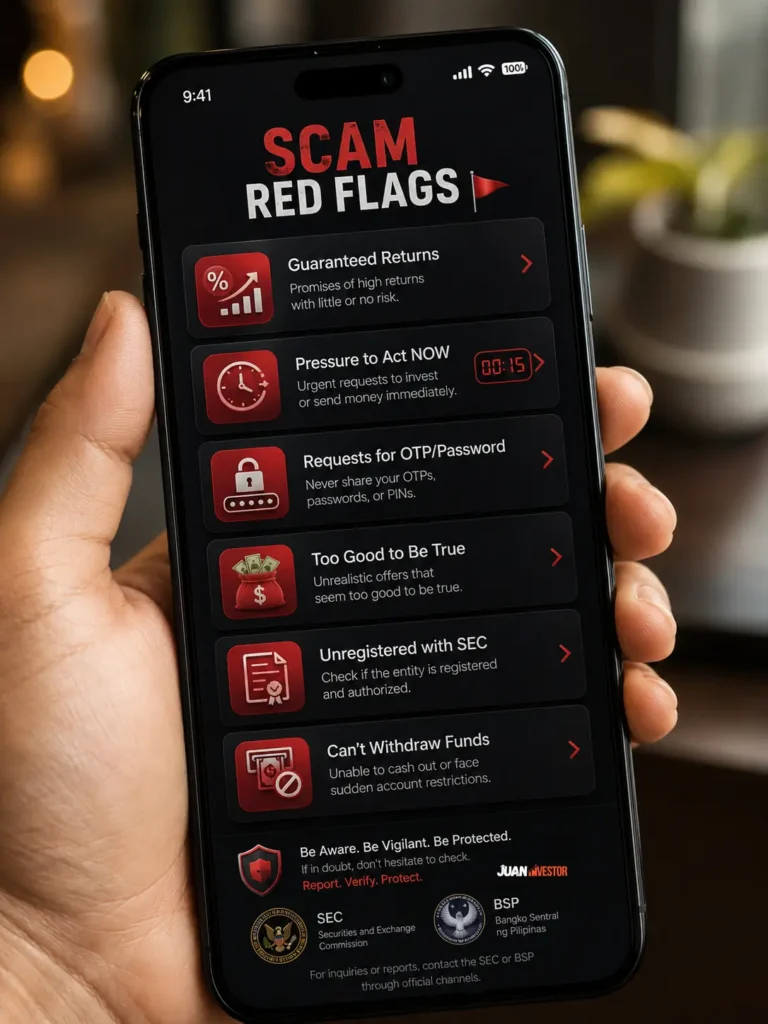
Red Flags to Watch For
Guaranteed returns: In legitimate investing, nobody can guarantee profits. If someone promises you’ll definitely make 20% monthly, they’re lying.
Pressure to recruit: If earning requires bringing in new members, it’s a pyramid scheme wearing a crypto costume.
Unregistered platforms: Check if the platform is registered with the SEC (Securities and Exchange Commission). If not, run.
Withdrawal restrictions: Legitimate platforms let you withdraw your money anytime. If there are complicated rules about when and how you can access your funds, it’s a trap.
Too-good-to-be-true testimonials: Those screenshots of massive profits? Easily faked with browser developer tools in about 30 seconds.
How to Protect Yourself Only use crypto platforms registered with Philippine regulatory bodies. Stick to established exchanges like Coins.ph, PDAX, or international platforms with proven track records. Never invest money you can’t afford to lose. And please, please ignore investment advice from random Facebook groups or Telegram channels.
Deepfake Bank Fraud
The technology that’s changing everything
Remember Ivy from the beginning? Her story isn’t unique anymore.
Deepfake technology (AI-generated videos and audio that can convincingly impersonate real people) has become accessible and terrifyingly effective. What once required a Hollywood budget can now be created with a decent laptop and freely available software.
Here’s how it works:
Scammers collect videos and photos of their target (usually from social media or company websites).
They feed this into AI software that learns to replicate facial movements, expressions, and speech patterns.
Within hours, they can create a video of that person saying anything they want.
How They’re Using It Against Filipinos
The Executive impersonation: Your company’s CFO appears on a video call requesting an urgent wire transfer for a “confidential business deal.” The voice matches, the face is right, even the background looks like their home office. Your accounting team processes the transfer. Later, you discover the real CFO was on a plane with no internet access.
The Family Emergency scam: You receive a video message from your brother, sister, or parent. They’re clearly distressed, explaining they’ve been in an accident or arrested and need money immediately. The emotional manipulation is powerful because it looks and sounds exactly like your loved one.
The Bank Manager con: Like Ivy’s experience, scammers impersonate bank officials to extract account information, OTPs (one-time passwords), or authorize fraudulent transactions.
Warning Signs
Deepfakes are getting better, but they’re not perfect yet. Watch for:
Unnatural blinking patterns: AI struggles with realistic eye movements
Lighting inconsistencies: The face might be lit differently than the background
Audio sync issues: Sometimes the lip movements don’t perfectly match the words
Unusual requests: Even if the person looks real, does the request make sense? Would your bank manager really ask for your password on a video call?
Pressure and urgency: Scammers create artificial time pressure to prevent you from thinking clearly
Your Defense Strategy
Follow these simple security guardrails.
Establish verification protocols with your family and business partners. Create a code word or security question that only you know. If someone requests money or sensitive information, even if they look and sound legitimate, hang up and call them back on a number you know is real.
For businesses: Implement multi-person approval for financial transactions above certain thresholds. No single video call, no matter how convincing, should be able to authorize large transfers.
And here’s the golden rule: Banks will never ask for your password, PIN, or OTP. Ever. Not on a call, not on video, not in person. If someone claiming to be from your bank asks for these, it’s a scam. Period.
Fake Investment Platforms
The Sophisticated Ponzi
Filipino scammers have learned from international operations and localized their approach. Today’s fake investment platforms don’t look fake. They have:
professional websites with SSL certificates (that little padlock in your browser)
active social media presence with thousands of followers
physical offices (sometimes just rented co-working spaces for photo ops)
celebrity endorsements (usually unauthorized use of photos)
seminars and webinars featuring “financial experts”
mobile apps on legitimate app stores
They’re so convincing that even financially savvy people fall for them.
The Most Common Schemes Right Now
Forex Trading Platforms: you’re promised access to “professional forex traders” who’ll invest your money in foreign exchange markets. The platform shows daily profits. You can withdraw small amounts initially. But it’s all smoke and mirrors, no actual trading is happening. Your money is just being moved around to pay earlier investors until the whole thing collapses.
Real Estate Tokenization Scams: scammers claim you can invest in fractional ownership of high-value properties through blockchain technology. You’ll receive “tokens” representing your share and earn rental income. The properties either don’t exist or aren’t actually owned by the platform.
Agricultural Investment Programs: invest in avocado farms, fish ponds, or coconut plantations and receive monthly returns. You might even get photos of “your” crops. But the farms are either non-existent or already owned by someone else entirely.
AI Trading Bots: platforms claiming to use “artificial intelligence” and “machine learning” to generate guaranteed returns from stock or crypto trading. The AI doesn’t exist, it’s just a random number generator on the backend showing fake profits.
How to Spot Them
You can do these things to verify the legitimacy of the investment platform.
Check SEC registration: Visit the SEC website and verify the company is registered and authorized to solicit investments. Many scam platforms operate without proper registration.
Research the people: Google the founders and executives. Do they have verifiable professional histories? Or do their LinkedIn profiles only go back six months?
Read the fine print: Legitimate investment platforms have detailed terms and conditions, risk disclosures, and clear explanations of how they generate returns. Scam platforms keep things vague.
Test withdrawal: Before investing significant amounts, invest small and try to withdraw. How easy is the process? Are there unexpected fees or delays?
Trust your gut: If the returns seem impossibly good, they probably are. A legitimate investment offering 50% annual returns would be front-page news, not advertised through Facebook ads.
The Recovery Scam (Yes, they’ll scam you twice)
Here’s a particularly cruel twist: After you’ve lost money to a fake investment platform, you might be contacted by a “recovery service” claiming they can get your money back—for an upfront fee, of course.
This is the same scammers (or their associates) trying to squeeze more money from victims. There is no legitimate service that charges upfront fees to recover scam losses. If you’ve been scammed, report it to the NBI Cybercrime Division or PNP Anti-Cybercrime Group, not to random “recovery experts” who contact you unsolicited.
AI Voice Phishing
Your voice is no longer yours
Voice cloning technology has reached a terrifying milestone: AI can now replicate your voice from just 3-5 seconds of audio. That’s less than a single sentence.
Think about how much of your voice is available online. Video calls, voice messages, social media stories, business presentations, podcast appearances. Scammers can harvest these samples and create a digital clone of your voice that’s virtually indistinguishable from the real thing.
The Attack Scenarios
Be mindful of these scenarios. Once you encounter them, be very careful on the transactions that you are about to make.
The Boss Scam: An employee receives a call from “the CEO” requesting an urgent transfer or asking for sensitive company information. The voice is perfect—same tone, same speech patterns, even the same verbal tics. The employee complies because they’re absolutely convinced they’re speaking to their boss.
The Relative in Distress: Your elderly parents receive a call from “you,” panicked and explaining you’ve been in an accident or legal trouble and need money wired immediately. They hear your voice, your vocabulary, your emotional tone. They send the money.
The Verification Bypass: Some banks use voice recognition as a security measure. Scammers with a voice clone can potentially bypass these systems to access accounts.
The Business Deal Gone Wrong: A supplier receives a call from “you” changing payment details for an invoice. The voice matches, so they update the bank information and send payment to the scammer’s account instead.
Defense Tactics
Here are one of the few things that you can do to increase your security.
Establish verbal passwords: create a code word with family members and business partners that must be used in any emergency money request. No code word? No money. No exceptions.
Implement callback protocols: if you receive an unusual request via phone, even if the voice sounds right, hang up and call back on a known number. Don’t use any number provided during the suspicious call.
Limit voice samples online: be mindful of what voice recordings you post publicly. This doesn’t mean you should never speak online, but consider whether that Instagram story with audio really needs to be public.
Educate your team and family: make sure employees and relatives know that voice phishing exists and that they should verify unusual requests through secondary channels.
Use additional verification: for sensitive transactions, require multiple forms of verification beyond voice like video confirmation, written authorization, or in-person approval.
The Psychology Behind Why We Fall For It
Understanding the scammer’s playbook is crucial because these schemes don’t just exploit technology. They exploit human psychology.
The Six Principles of Influence (Scammer edition)
Authority: scammers impersonate people in positions of power – bank managers, government officials, company executives, because we’re psychologically wired to comply with authority figures.
Social Proof: “10,000 Filipinos have already joined!” We look to others to guide our behavior, especially in uncertain situations.
Liking: scammers build rapport, often spending weeks or months developing fake relationships before making their move. We’re more likely to trust people we like.
Reciprocity: they might offer something free first such as a small return on an initial investment, a helpful tip, or a gift, creating a psychological obligation to reciprocate.
Commitment and consistency: once you’ve made a small investment, you’re psychologically motivated to continue (to prove you weren’t wrong) even as red flags appear.
How to Build Your Financial Firewall (Action Plan)
Knowledge without action is just entertainment. Here’s your concrete, step-by-step protection plan:
5 Immediate Actions to Do Today
Worry not, there are a few simple yet proven ways to keep you and your family not easily prone to these frauds and scams.
Enable two-factor authentication (2FA) on all financial accounts, email, and social media. Use authenticator apps rather than SMS when possible (SMS can be intercepted).
Review your privacy settings on Facebook, Instagram, and other platforms. Limit who can see your posts, photos, and personal information.
Set up transaction alerts with your bank so you’re notified immediately of any account activity.
Create a family code word for emergency situations requiring money. Share it only with trusted family members through secure, in-person conversations.
Bookmark official websites for your banks and investment platforms. Always access them through your bookmarks, never through links in emails or messages.
Weekly Practices
Check your bank and credit card statements for unauthorized transactions. The sooner you catch fraud, the better your chances of recovery.
Review your social media posts from a scammer’s perspective. What information are you giving away that could be used against you?
Update your passwords regularly, using unique passwords for each account. Consider using a password manager like Bitwarden or LastPass.
Monthly Habits
Verify your investments by logging into official platforms and confirming your holdings. Don’t rely solely on screenshots or PDF statements sent to you.
Google yourself to see what information about you is publicly available. Request removal of sensitive information where possible.
Educate someone else about these scams. Share this knowledge with family, friends, or employees. Community protection is collective protection.
Before You Engage On Any Investment
Do these 5-step non-negotiable checklist strictly.
SEC verification: check if the company is registered at sec.gov.ph or call the SEC hotline at (02) 8818-0921.
Research the people: Google every name associated with the opportunity. Check their backgrounds, previous ventures, and any news articles.
Sleep on it: never invest on the spot, no matter how compelling the pitch. Give yourself at least 48 hours to research and think clearly.
Consult a professional: talk to a licensed financial advisor or attorney before making significant investments.
Start small: if you decide to proceed, invest only a small amount first and test the withdrawal process.
What to Do If You’ve Been Scammed
First, breathe. Shame and embarrassment keep many victims silent, which only helps scammers continue operating. You’re not stupid. You’re human, and you encountered a sophisticated criminal operation.
Immediate Steps to Do if You’ve Been Scammed
Contact your bank immediately if the scam involved your bank account or cards. They may be able to freeze transactions or reverse transfers if you act quickly.
Change all passwords for accounts that may have been compromised. Enable 2FA if you haven’t already.
Document everything: Take screenshots of conversations, websites, transaction records, and any other evidence. This will be crucial for reporting.
Report to authorities: NBI Cybercrime Division: (02) 8525-4093 or cybercrime@nbi.gov.ph, PNP Anti-Cybercrime Group: (02) 8723-0401 local 7491, SEC Enforcement and Investor Protection Department: (02) 8818-0921
Report to the platform: if the scam occurred through Facebook, Instagram, or another platform, report the account and posts.
Warn others: share your experience (without shame) to prevent others from falling for the same scheme.
Recovery Reality Check
I wish I could tell you that reporting always leads to recovery, but the truth is more complicated. The Philippines has made significant strides in cybercrime enforcement, but the international nature of many scams and the use of cryptocurrency makes recovery difficult.
However, reporting is still crucial because:
it helps authorities identify patterns and shut down operations
it may prevent others from becoming victims
it creates an official record that may be useful for insurance or tax purposes
some victims do recover funds, especially if they act quickly
Don’t fall for “recovery services” that promise to get your money back for an upfront fee—that’s just another scam.
Final Thoughts
I’m not trying to make you paranoid. I don’t want you to distrust every video call, suspect every investment opportunity, or fear every phone call.
But I do want you to be prepared.
The difference between paranoia and preparedness is knowledge. Paranoia is vague, unfocused fear. Preparedness is understanding specific threats and having concrete plans to address them.
You now know what you’re up against. You understand how deepfakes work, how crypto scams operate, how voice cloning enables fraud, and how fake investment platforms trap victims. You have specific red flags to watch for and concrete actions to take.
That knowledge is your shield.
Verify before you trust. Question before you invest. Pause before you send.
And share this knowledge with every business owner, young professional, and freelancer in your network.
Because the best defense against these evolving threats isn’t just protecting yourself, it’s building a community where scammers find no easy targets, where every potential victim is actually an informed citizen who knows exactly what to look for.
Your money, your business, your financial future, they’re worth the vigilance.
Have you encountered any of these scams? Share your experience (anonymously if you prefer) to help protect others in the community. Knowledge shared is protection multiplied.
Founder, Juan Investor • Digital marketing expert and investor
Paul bought his first stock in 2013 and has spent the decade since compounding and making the expensive mistakes he now writes about so you can skip them. Read my profile.
Investing since 2013
Stocks, Crypto, Index funds
Meta ads practitioner
Paul Daveril Dabuco is the founder and author of Juan Investor. He started investing in stocks in 2013 and currently holds a portfolio of stocks, crypto and index fund investments. When he’s not blogging he’s either tinkering on Facebook ads or exploring white sand beaches across the globe.










Leave a Reply